Ranking a page and getting it cited are separate builds
Making a page rank is a solved problem for me. Getting the same page cited by an answer engine is a separate engineering job with its own scorecard.
I own appsmith.com end to end, and it runs about 45K organic sessions a month. Making pages rank is a problem I've solved more than once. Getting the same pages cited by an answer engine is a separate engineering job, and it's the channel where B2B growth teams plan to raise spend the most.
What I've already shipped
At Appsmith I'm responsible for the architecture, the component library and the CMS workflows. The site serves ~45K organic sessions and 50K+ visitors a month, and I took LCP from 2.8s to 1.8s. Before that, at Pilot, I shipped 20K+ programmatic pages that added ~45K organic sessions a month.
Where the budget is moving
The 2026 State of B2B GTM Report from Growth Unhinged surveyed 300 software GTM leaders. AI search is a core GTM channel for 39% of respondents, up 11 points from last year, and it's the top channel for planned investment increases.
That shift changes the brief for a marketing site. A page can hold a top position in Google and still be missing from an assistant's answer, so rank alone stops describing how visible the site is.
What decides a citation
Two studies show how much citation depends on structure:
- Ahrefs (2025, 17M citations) found that the content assistants cite runs about 26% fresher than what ranks organically.
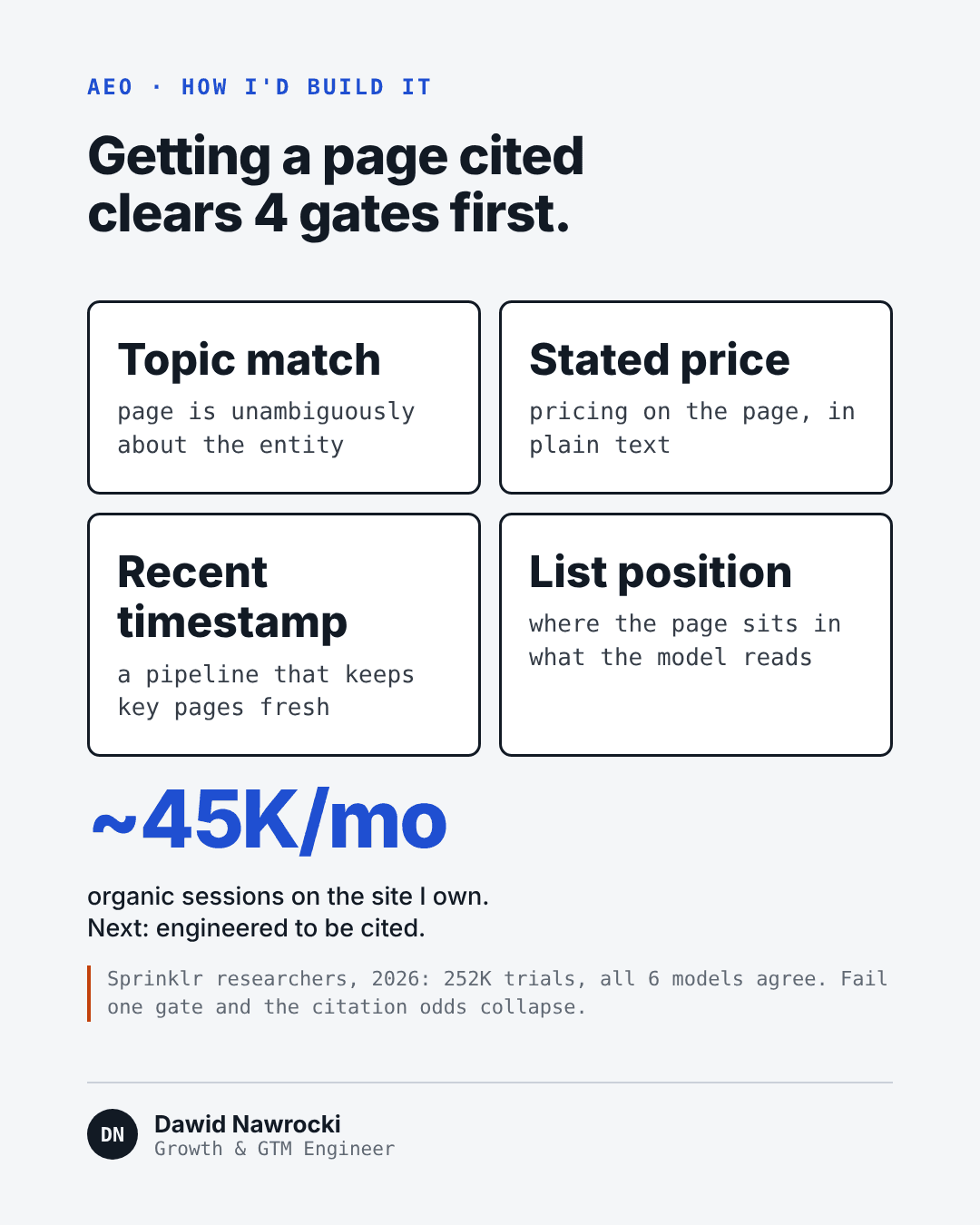
- Sprinklr researchers (2026, 252K trials across 6 models) found four gates that all six models agreed on: topic match, a stated price, a recent timestamp and position in the list the model reads. Failing any one can sink a citation whatever else the page does well.
Three of those four gates are things an engineer controls in the page itself and in the publishing pipeline.
What I'd build into the next site
- Entity-structured pages a retriever can parse.
- Pricing and specs stated on the page where most sites hedge.
- A freshness pipeline for the pages that earn citations.
- Citation share tracked the way we track rank today.
None of this replaces the SEO work. It adds a second scorecard next to rank, and each item on the list is something an engineer can ship and measure.
How far this goes
I've shipped the site and the SEO. The citation layer is the part I'd build next, so I don't have a delivered number for it yet. The Ahrefs finding is a correlation and the Sprinklr paper ran controlled paired comparisons of two documents, a long way from live search, so I read both as direction for a build plan.
If you run a marketing site, are you measuring whether answer engines cite you, or only where you rank?
Want to talk about this?
Email me. I reply personally.